

Heated Gear Durability: 7 Facts for Winter Buyers
Quick Summary
Heated gear durability depends more on build quality, care and how hard the garment is worked than on whether it is heated. Heated clothing is not established to wear out faster than ordinary winter wear. Longevity comes mostly from removing the battery before washing, drying fully, and charging and storing the battery sensibly.
- Remove the battery pack before every wash to protect wiring and connectors.
- Air dry the garment flat, away from direct heat, and never tumble dry it.
- Store the battery at about half charge in a cool, dry place.
- Milwaukee Tool lists runtimes of up to 12 hours on low and 6 hours on medium, without stating test conditions.
Table of Contents
- How Long Heated Gear Lasts in Real Winter Use
- How Long Do Heated Batteries Last Per Charge and Over Time?
- How to Wash Heated Clothing Without Damaging the Heating Elements
- Heated Gear Troubleshooting: Common Failure Points and Fixes
- Storing Your Heated Jacket or Hoodie So It Works Next Winter
- Frequently Asked Questions
How Long Heated Gear Lasts in Real Winter Use
Heated gear durability depends less on whether the garment is heated and more on how it's built, how it's cared for, and how hard it's worked. Many buyers assume heated clothing wears out faster than ordinary winter wear, but that isn't established.
A useful point comes from ORORO's own guidance: longevity depends more on product quality and care than on whether clothing is heated, and traditional clothing has fewer moving electrical parts to fail ORORO, "Heated Clothing vs. Traditional Winter Wear: Which is Better?". That framing is worth keeping in mind. A heated jacket adds a battery, wiring and connectors, so the question is whether those parts are well made and well looked after.
Real winter use tends to wear heated gear in a few predictable ways. Repeated bending at the elbows, shoulders and waist can stress the wiring. Moisture reaching the battery pocket or connector is a common source of trouble. Frequent washing, tumble drying and storing a damp garment all add up over a season.
To judge durability beyond marketing claims, look for evidence that a brand or reviewer has actually tested the garment rather than just worn it.
Checking the electrical parts matters as much as inspecting the fabric.
Most of the lifespan you actually get comes down to habits:
- Remove the battery before every wash.
- Let the garment air dry completely before charging or storing it.
- Check connectors and wiring for fraying after heavy use.
- Store the battery at a partial charge in a cool, dry place.
Checking the garment regularly during peak season helps you catch small problems early.
How Long Do Heated Batteries Last Per Charge and Over Time?
Battery runtime is the question most buyers ask first, and it has two parts: how long one charge lasts, and how the battery holds up over many charges.
Per-charge runtime depends on the heat setting, the ambient temperature and the size of the battery. Manufacturers publish runtime claims, and these are useful as a starting point. For example, Milwaukee Tool's M12 Heated Gear page lists runtime of up to 12 hours on low and 6 hours on medium Milwaukee Tool M12 Heated Gear product page. Those figures come from the manufacturer and do not say which battery or test conditions were used, so compare them with care.
Over time, lithium batteries lose capacity gradually, and runtime may shorten with age.
Charging habits that protect battery life
Charging habits make a real difference to how long a battery stays useful. A few simple rules help:
- Charge after each day of use rather than waiting until the battery is empty.
- Avoid leaving the battery on the charger for days at a time.
- Keep the battery out of direct sun and off a heater while charging.
- Store it at roughly half charge if you won't use the gear for several months.
For longer days outdoors, a larger external power bank can help you keep going. The 50000mAh PowerBank for Heated Hoodie is available from our store.

Manufacturer runtime figures give a starting point, though they do not state their test conditions.
| Setting | Claimed runtime | Source note |
|---|---|---|
| Low | Up to 12 hours | Milwaukee Tool M12 Heated Gear |
| Medium | Up to 6 hours | Milwaukee Tool M12 Heated Gear |
| Battery test conditions | Not stated | Manufacturer claim only |
How to Wash Heated Clothing Without Damaging the Heating Elements
Washing is where many heated garments get damaged, usually because the battery or connector was left in. The heating elements themselves are thin and sit inside the fabric, so the rule is simple: remove the power source before the garment goes anywhere near water.
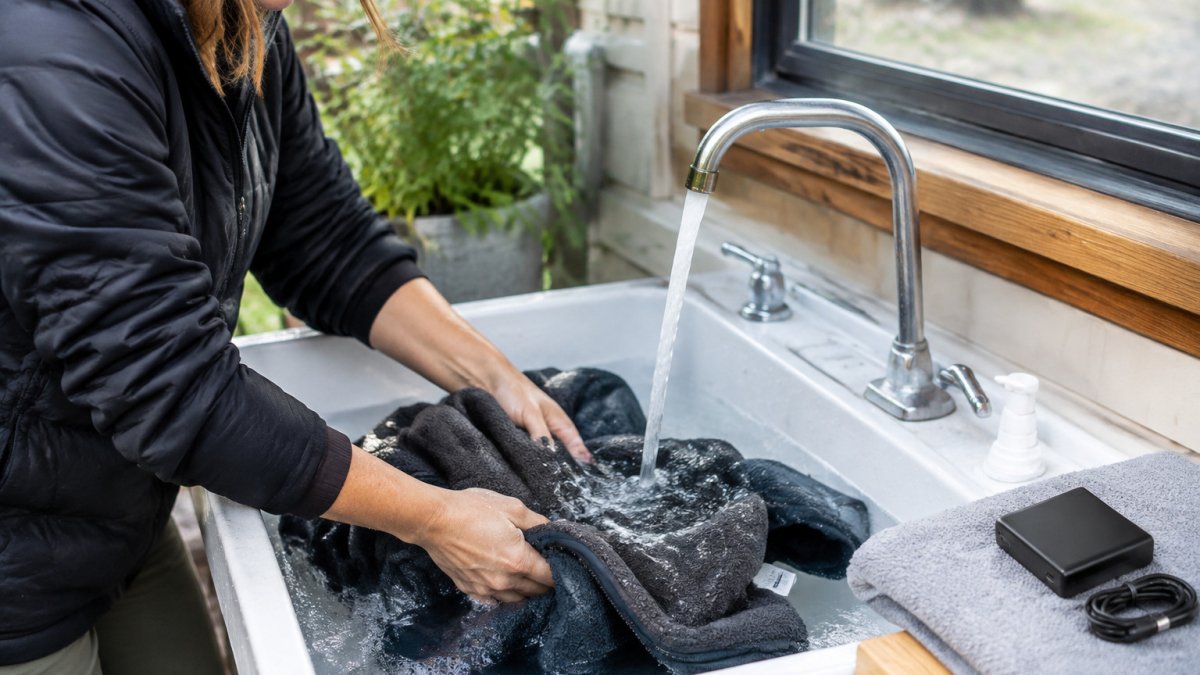
Follow this order every time:
- Disconnect and remove the battery pack.
- Check the connector for dirt or moisture and dry it.
- Turn the garment inside out and close any zips.
- Wash on a gentle cycle in cool water with mild detergent. Avoid bleach and fabric softeners.
- Air dry flat, away from direct heat. Do not tumble dry.
Gently rinsing the fabric in cool water keeps stress off the wiring. Wring it out lightly rather than twisting, since twisting can strain the connections.
Heated Gear Troubleshooting: Common Failure Points and Fixes
Most failures show up in the same few places. Knowing where to look saves time and often avoids a return. For a closer look at the underlying design, see how heated clothing works step by step.
No heat at all. Check the battery first. Charge it fully, then try a different button press to confirm it powers on. If it still does nothing, inspect the connector for corrosion or debris.
Only one zone heats. This usually points to a loose connection or a fault in the wiring to that zone. Gently reseat the connector and check the cable along its length for kinks or fraying.
Intermittent heat. Movement can stress a wire where it meets a connector. Look for the spot where heat cuts out when you bend or move, and check that point closely.
If a fix doesn't work, contact the manufacturer before opening the garment. Taking apart the heating system yourself can void the warranty and make a repair harder.
Storing Your Heated Jacket or Hoodie So It Works Next Winter
Good storage helps your gear stay in good condition between seasons.
Start with a clean, fully dry garment. Store the battery separately at about half charge in a cool, dry place, and recharge it every few months so it doesn't drift to empty. Fold the garment loosely instead of hanging heavy sections for long periods, which can stretch the fabric and strain the wiring.
Before you pack it away, run a quick check: confirm every zone heats, look over connectors, and note anything that needs attention. Fixing a problem now means the gear is ready on the first cold morning. If you're weighing whether to replace old gear, choosing a durable heated jacket for extreme cold covers what to look for.
Ready to find gear built for real winter use? Explore the RuggedClimate™ Heated Hoodie for a layer that stays warm through a full season. Our team at RuggedClimate™ has put together these care tips so your heated gear lasts longer, and every piece is backed by simple, practical maintenance you can do at home.

Frequently Asked Questions
How many years do heated vests last?
Most heated vests can be expected to last several winters, but no independent lifespan study for heated apparel was found in the research for this article. Lifespan depends more on build quality, how often the garment is used, how carefully it is washed and stored, and how the battery is charged than on the heating feature alone. The practical test is whether the wiring, connectors and seams stay intact across seasons. Check the warranty terms and inspect the heating zones before each winter.
How long do heated clothing batteries last on one charge?
Battery runtime depends on the heat setting, the battery capacity and the temperature outside. The RuggedClimate 50000mAh PowerBank is rated at a 120W maximum output and a recharge time of about 6 hours, and runtime on each setting should be checked against the heat level you use most. Running on high drains the battery faster than low, so switch to a lower setting once you are warm.
Can heated jackets or vests go in the washing machine?
Remove the battery pack and any detachable controller before washing, and wash the garment by hand in lukewarm water with a mild detergent. Avoid bleach, fabric softener and high-heat drying. Air-dry the garment flat and away from direct heat. Always follow the care label, because specific heated garments may have their own instructions.
What are the most common causes of heated gear failure?
The most common problems are damaged or loose connectors, a battery that no longer holds charge, and wiring that has been flexed or crushed at the seams. Water getting into the connector area and repeated bending at the same point can also cause heating zones to stop working. If one zone fails but the others work, check the connector and the wiring at that zone before assuming the whole garment is faulty. Keeping connectors dry and avoiding sharp folds in storage prevents many of these failures.
